Columns

Wed
11
Mar

Did You Know?

Did You Know?

Most history buffs occasionally venture off into areas they know little about but that is one way to gain additional knowledge. Early medicine and early doctors of DeSoto Parish are today’s topics. Of course there are plenty of doctors that would know more about early medicine than this writer but have you seen any of them take the time to write about it?

Medicine as we know it today is almost solely a 1900’s and 2000’s development. Until the early 1900’s there were only a few drugs and most of them came from plants. Aspirin, quinine, morphine and it derivative of paregoric, either and chloroform all were plant based. In early times and even to some measure today illnesses were personal. When a person was sick they were referred to as “indisposed, confined, under the weather or puny”. Early obituaries usually referred to the deceased as “God took them to their rewards or they were called home to Jesus”.

Wed
04
Mar

The Farm Wife

The Farm Wife
The Farm Wife

Life Lessons from the Garden Gate

There’s a lot you can learn just by standing at a garden gate. Not working. Not digging. Just stopping for a moment, hands on the latch, surveying what’s grown and what hasn’t. Gardens are very honest that way. They don’t flatter. They don’t make excuses. They simply show you the results.

Some years, the gate opens to abundance. Things are lush, a little unruly, maybe even ahead of schedule. Other years… well, let’s just say the weeds appear to be thriving on encouragement alone. But that pause at the gate — that’s where the lessons live.

A garden gate reminds us that everything has a season, and no amount of fretting will convince a tomato to ripen faster (trust me — I’ve tried). You can water, weed, and fuss all you want, but growth still happens on its own timeline. Life seems to work the same way.

Wed
04
Mar

Did You Know?

Did You Know?

A number of historical buffs have wondered how the early settling of the parish was done and how the settlers were organized. Generally speaking the northern part of the Parish was settled by slightly more affluent families and earlier than the southern portion. For this article let’s trace the southern portion south of present day U.S. Hwy 84 from Mansfield to Stanley, La. This road, one of the five major east/west roads of Louisiana known as the “Lone Star Road” or “Three Slash Road” because it was marked by 3 slashes on the trees lining the trail to mark this road.

Wed
25
Feb

The Highs and Lows of Billy Cannon — The Toast Of LSU!

The Highs and Lows of Billy Cannon — The Toast Of LSU!

You just cannot keep Billy Cannon out of the news. LSU’s all-time football hero was pardoned by President Trump last week. And this brought back memories of the guy who put LSU football on the national map.

There are certain things you don’t forget. Where you were on 9/11, or when President John Kennedy was shot. Down here in the Bayou State, add to those special dates Halloween night 67 years ago when Billy Cannon made football history with his 87 yard run to beat Ole Miss and keep the Tigers undefeated. His story is the rise and fall, than the rise again by LSU’s all time sports hero. And guess what? I played a minor role in what became Billy’s personal nightmare and fall from grace.

Wed
18
Feb

Did You Know?

Did You Know?

Arlington Cemetery has been in the news for the past few months without many of us knowing the tremendous history involved. As Paul Harvey said, “Here’s the rest of the story.”

George Washington’s adopted son — his wife Martha’s only son — bought the land know as Arlington in 1778 to be closer to his mother at their beloved Mount Vernon home. General Washington advised him on the purchase in correspondence from his winter camp at Valley Forge. However, three years later her son contracted fever at Yorktown and died leaving a six-monthold son. George and Martha raised the six month of boy whose name was George Washington Parke-Custis and nicknamed “Wash”. Wash became of age and inherited the Arlington land his real father had purchased but his lifelong mission became to honor his adopted father.

Wed
18
Feb

The Farm Wife

comThe Farm Wife
comThe Farm Wife

2026 — The Comfort of Shared Work

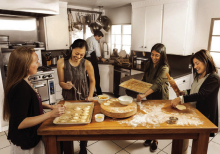
There’s a special kind of comfort that comes from doing work alongside someone else. Not delegating. Not “watching while giving instructions.” Actually doing it together — elbows out, flour on the counter, and no one pretending this is glamorous. Shared work has a funny way of making things feel lighter, even when the task itself isn’t.

Take baking, for example. One person measures, another spills. Someone forgets how many cups they’ve already added. There’s always a moment of confusion about what to do next. Yet somehow, by the time the timer goes off, the mess feels manageable and the kitchen feels fuller — people-wise, not just dish-wise.

Wed
18
Feb

AgMinute

AgMinute
AgMinute
AgMinute

Mirlitons are part of Louisiana’s heritage — and they’re easy to grow at home

Like a lot of people who grew up in Louisiana, LSU AgCenter horticulturist Jason Stagg has fond memories of eating casseroles and other dishes his mother prepared using mirlitons — a unique squash that has been grown in the state for generations.

Mirlitons (Sicyos edulis or Sechium edule) — also known as vegetable pears and alligator pears — are a pear-shaped squash with a mild flavor. They’re usually green but sometimes are white. Known as chayote in their native Mexico and Central America, some sources indicate they arrived in Louisiana by way of Haiti in the 19th century.

It’s easy to grow your own mirlitons. Traditionally, mirlitons are planted outdoors in the spring. But if you have some space indoors or in another warm, protected area, you can plant them in containers while it’s still winter and get an early start on your vine, Stagg said.

Wed
11
Feb

From the Word

From the Word

From the hospital to the rehab center and back to the hospital, then back to the rehab center and now…she has come home! And now her power has gone off. I had visited with her this evening before coming in with my son Bruce from South Louisiana.

Wed
11
Feb

Did You Know?

Did You Know?

During and after the Civil War Louisianans were faced with many unbearable problems. Our northwest Louisiana area faced the hardship and cruelty inflicted by the Carpet Baggers (Northern troops and individuals sent after the war to enforce privileges for the Negros). But central and south Louisiana had tremendous problems with the Jayhawkers.

The Jayhawkers were a terrifying and widespread group of notorious mongrel men whose goal was to cause havoc in the area. It appeared to have originated in Winn Parish and spread eastward and southwards. Whatever their motivation they formed violent gangs to take advantage of the war’s chaos to rob, steal and murder.

Wed
04
Feb

Did You Know?

Did You Know?
Did You Know?

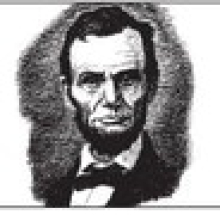
Most people that have studied history through the years have questioned certain points or thoughts that are generally accepted or projected as ideas. Abraham Lincoln has been presented as an agnostic or even atheist president in religion.

By chance I came into possession of a Mobile, Alabama newspaper article that was 100 years old and written by Thomas B. Mc-Gregor, Assistant Attorney General of Kentucky. Evidently McGregor had wondered about Lincoln’s religious affiliation or lack thereof. Also, evidently proven that Lincoln was reared in the Baptist Church. Most of the religious mystery of he and his parent religious life was found in the deerskin covered ledger of the Little Pigeon Church where Mc-Gregor found that Thomas Lincoln, Abe’s father, acted as Moderator and was a pillar of the Little Pigeon church near Lincoln City, in Spinder County, Indiana.

Pages

Subscribe to RSS - Columns